

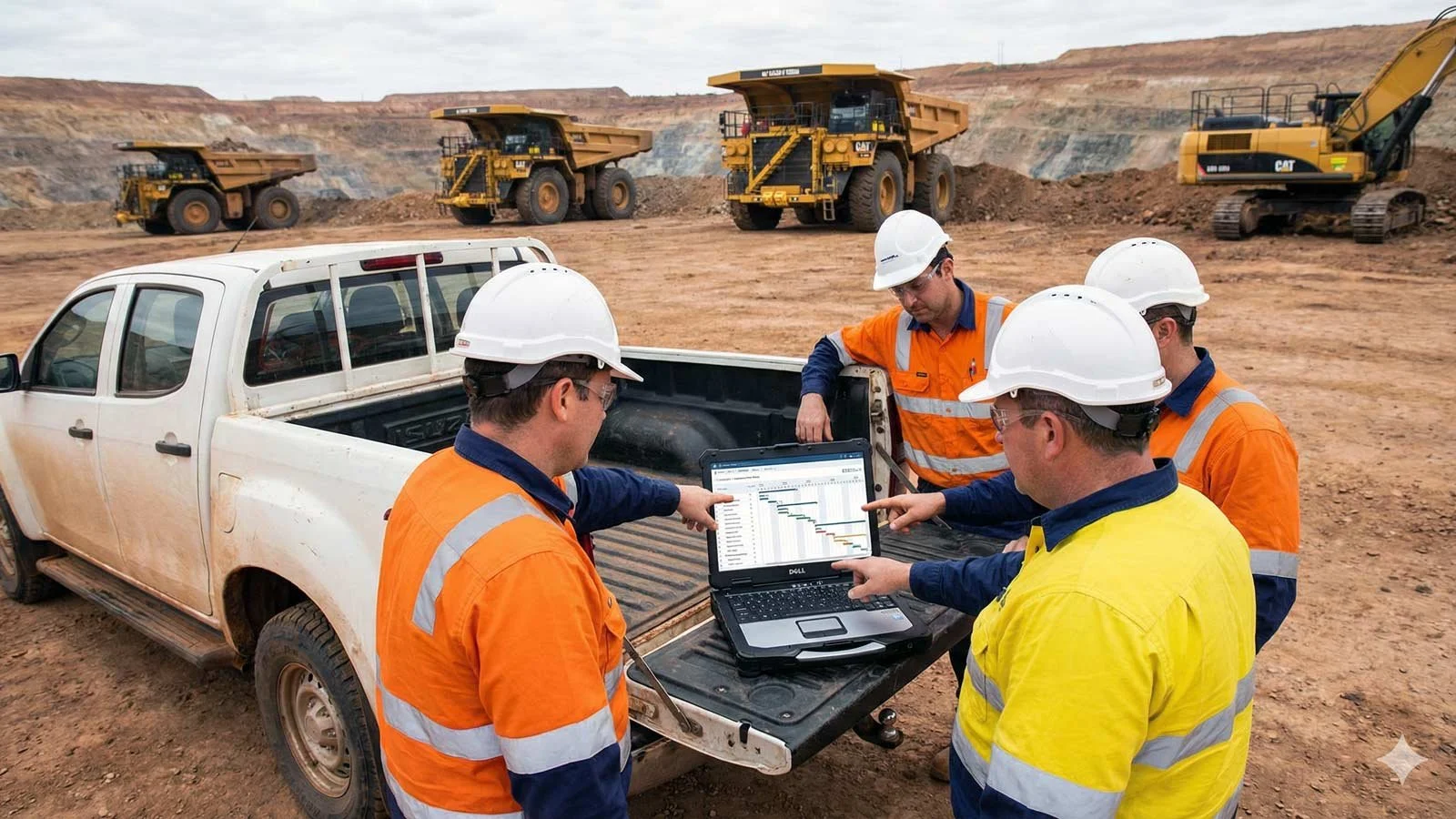
Project Controls
Integrated project controls for complex programmes: schedule development, progress measurement, cost and schedule integration, and reporting that gives project directors clear data-backed decision making. Project Scheduling provides independent project controls for construction and mining programmes across Australia, so you see where the job actually stands, not where it was assumed to be.
When You Need It
Project controls matters when a project is large or complex enough that gut feel is not enough. When several disciplines run at once, when cost and programme need to reconcile, or when the client or board wants a reliable read on progress, controls turn scattered data into a single, trustworthy picture.
What It Covers
Schedule development and maintenance against a controlled baseline
Progress measurement tied to real, verifiable completion, not optimistic percentages
Cost control and cost and schedule integration, so time and money reconcile
Change control, capturing variations and their time and cost impact as they arise
Earned value where the contract, client or programme scale requires it
Variance and trend analysis, flagging slippage early enough to act
Risk and contingency management across the programme
Forecasting of cost and completion, updated as the project progresses
Reporting that gives project directors and clients a clear, data-backed status
Built on a Sound Schedule
Controls are only as good as the programme underneath them. The schedule is built and maintained to a quality standard, so progress, cost and forecast all trace back to a programme that holds together. Without that, controls report noise; with it, they report a reliable, evidence-based position.
Independent and Sector-Specific
Project Scheduling works across construction, mining and resources, oil and gas, power and water, utilities and renewables, heavy industrial, infrastructure, and multi-discipline engineering programmes. The work is independent and delivered directly, so the reporting reflects the real position, not a managed message.
Get clear, data-backed decision making on time, cost and progress. Let us set up controls that give you the full picture.
Common Questions
What is the difference between project controls and project management?
Project management runs the work and makes the decisions; project controls give the manager the data to decide with. Controls measure progress, track cost against programme, forecast where the job is heading, and flag slippage early. They are the instrumentation, not the driver, so the project director acts on evidence rather than optimism.
What is the difference between project controls and scheduling?
Scheduling is one part of project controls. The schedule sets out what happens when; controls add progress measurement, cost and schedule integration, change control, forecasting and reporting around it. A schedule tells you the plan, controls tell you whether the plan is holding and what the likely time and cost consequences may be.
Do we need earned value management?
Only where the contract or client requires it, or the programme is large enough to justify it. Earned value is powerful on major projects because it ties progress and cost to a common baseline, but on smaller jobs it can add overhead without adding insight. The measurement should match the project, so controls are set at the level that gives a reliable read without drowning the team in process.
Can you set up project controls partway through a project?
Yes, and it is a common point to bring them in, often when a job has grown beyond what informal tracking can handle or the reporting has stopped being trusted. The first step is to establish an agreed baseline from the project's current verified position, then build progress, cost and forecast reporting on top, so from that point the status reflects reality rather than accumulated assumption.
See the Real Position on Your Project
Time, cost and progress in one trustworthy picture, so the next decision rests on data, not assumption. Let us set up controls that show where the job actually stands.