

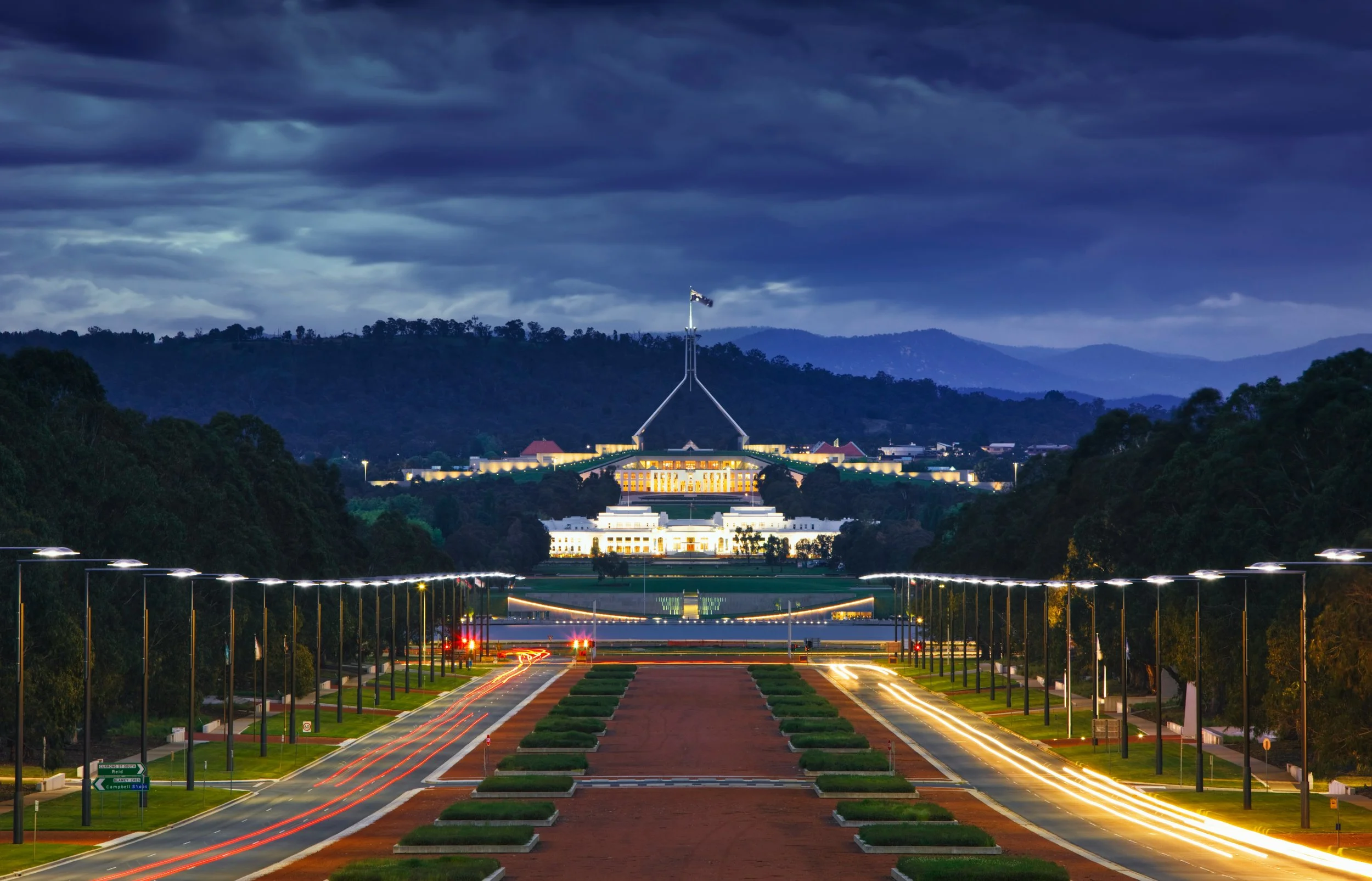
Construction Scheduling in Canberra
For construction scheduling in Canberra and the ACT, we build programs for transport, government and infrastructure projects in Primavera P6, or in Microsoft Project where the client or tender calls for it, from tender and baseline through to completion. Each program sets out how procurement, approvals and resources drive the sequence, and the delivery team tests the method and crewing assumptions before the program is released.
Canberra project scheduler services in Primavera P6
Our tender programs in Canberra are written to become the basis of the contract program. After award, the bid sequence and assumptions are reconciled with the contract scope, approval dates and agency requirements, each change is recorded, and the agreed program is maintained to completion.
Tender programs: a sequence, Indirects, procurement timing and resource histogram to suit ACT Government and Commonwealth tender requirements, submitted with the Basis of Schedule and Methodology.
Program updates: progress recorded against the baseline at each data date, with variance explained in the form agency reporting requires and every issued update kept on record.
Schedule risk analysis: probabilistic completion dates and contingency for funding submissions and assurance reviews.
Forensic delay analysis: delay and extension of time claims assessed from the contemporaneous program and project records.
Our Canberra project scheduling services also cover baseline programs under change control, shutdown and turnaround planning for operating facilities, and schedule recovery from the current position.
ACT project experience
ACT work we have delivered includes:
Canberra Light Rail: scheduling across the portfolio, from the stabling upgrade and Stage 2A to rolling stock procurement, and Stage 2B feasibility, scenario analysis and approvals pathway planning
Stage 2B approvals pathway planning: environmental assessment, approval requirements for works through the National Triangle, National Capital Authority and ACT planning requirements, public notification and engagement periods, and the implications of election caretaker conventions for relevant decisions
Canberra Light Rail: delay claim work, built on the project’s contemporaneous programs and records
Major Projects Canberra: scheduling support on other projects in the agency’s portfolio
Across the light rail portfolio, the programs supported staging through an operating city and coordination between government stakeholders and approval authorities. Current programs and traceable records supported scenario testing and the assessment of delay. We apply the same scheduling and recordkeeping approach to other ACT projects.
Government engagement
Project Scheduling was appointed to the ACT Government’s Infrastructure Canberra Specialist Advisors Panel.
How ACT conditions shape construction planning
Approval responsibilities mapped before sequencing. With the project’s planning advisers, we check whether each part of the works falls within a Designated Area, the Parliamentary Zone or the ACT planning system, and where approvals overlap, the program shows their dependencies, including parliamentary scheduling where applicable.
Heritage identified early. Many Canberra sites carry ACT or Commonwealth heritage values. Working with the project’s heritage advisers, we identify the applicable requirements early and schedule the documentation, advice and decisions before the work they control.
Specialist trades sourced from interstate. RLB reports that some ACT specialist trades are at or near capacity, increasing reliance on interstate resources. Where a package depends on interstate crews or suppliers, we show their mobilisation lead times, travel and availability as separate assumptions, confirmed with the delivery team, rather than assuming local capacity.
Cold-weather work and territory calendars. Canberra winters bring frosts and cold mornings that affect concrete placement, curing, coatings and early starts on outdoor work. The ACT has its own public holidays, including Canberra Day and Reconciliation Day. Working-hour and placement assumptions are recorded as agreed with the delivery team, and site crews, interstate suppliers and approval activities run on their own calendars where their availability differs.
ACT project pipeline
The ACT Infrastructure Investment Program forecasts $7.5 billion over the five years to 2030-31, including $1.1 billion in 2026-27.
What the pipeline means for construction scheduling in Canberra
Competition for skilled labour is intense. RLB’s September 2026 report describes competition for skilled labour and specialist subcontractors as intense across the ACT market, with limited availability in building, civil and building services trades. Tender participation is generally healthy, but pricing reflects workload certainty and resource availability.
Escalation is forecast at 4% or higher. RLB forecasts Canberra tender price escalation of 4.7% in 2026, 4.8% in 2027, 4.3% in 2028 and 4.0% in 2029, supported by ACT Government and Commonwealth-funded pipelines in healthcare, security, education and transport.
Major projects are progressing. RLB notes the Northside Hospital and Light Rail Stage 2A among the major projects progressing.
The national workforce gap is widening. Infrastructure Australia’s November 2025 report put the October 2025 shortfall on public infrastructure at 141,000 workers, rising to a forecast peak of more than 300,000 in mid-2027.
Where pricing depends on workload certainty, a clear program and stable dates can affect bidder interest. The procurement and crewing assumptions are stated in the program, each with the date by which the subcontractor, crew or supplier has to be confirmed.
ACT approvals in the program
Canberra projects can involve overlapping ACT and Commonwealth requirements. With the project’s planning advisers, we confirm the applicable approval pathways for each part of the works, including National Capital Authority Works Approval in Designated Areas, which applies in place of ACT development approval, and additional approval by both Houses of Parliament where required for works in the Parliamentary Zone. The scope of works requiring approval and the mapped boundaries are confirmed with the project’s advisers. The program models each applicable pathway and its dependencies, from submissions and assessment to parliamentary scheduling and final decisions, rather than treating each approval as an independent milestone.
For ACT heritage places, we distinguish works requiring development approval from any applicable exempt-development pathway, and identify the heritage documentation and Heritage Council consideration required. Early heritage advice is scheduled separately from formal decisions. Commonwealth environmental and heritage requirements are checked separately: depending on the land, the proponent and the potential impacts, the project may require EPBC referral, assessment or approval, and may also carry specific Commonwealth heritage obligations. We establish the applicable steps with the project’s planning, environmental and heritage advisers and link the relevant submissions, decisions and conditions to the design, procurement and construction they control. Our scheduling project approvals article sets out the approach step by step.
Frequently asked questions
Do you schedule in Microsoft Project as well as Primavera P6?
Yes. We prepare programs in Primavera P6 and use Microsoft Project where the client or tender requires it. In either platform, we review activity logic, calendars, constraints and the critical path against the project’s requirements.
Are you on an ACT Government panel?
Yes. Project Scheduling was appointed to the ACT Government’s Infrastructure Canberra Specialist Advisors Panel for Planning, Scheduling and Project Controls. The panel provides a procurement pathway for ACT Government engagements, with individual assignments subject to the agency’s engagement process.
How do you handle National Capital Authority and parliamentary approvals?
We confirm which authority applies to each part of the works, including National Capital Authority Works Approval in Designated Areas and additional parliamentary approval where required in the Parliamentary Zone, then model each pathway and its dependencies with the project’s advisers.
How do you program heritage requirements in Canberra?
We identify ACT and Commonwealth heritage values at the start, distinguish advice and documentation from formal decisions, and link each applicable step to the works it controls, working with the project’s heritage advisers.
Delivering for the ACT or the Commonwealth?
Talk to a project scheduler about a program that connects approval pathways, heritage requirements and interstate resource availability to the work sequence, with traceable progress and update records.