

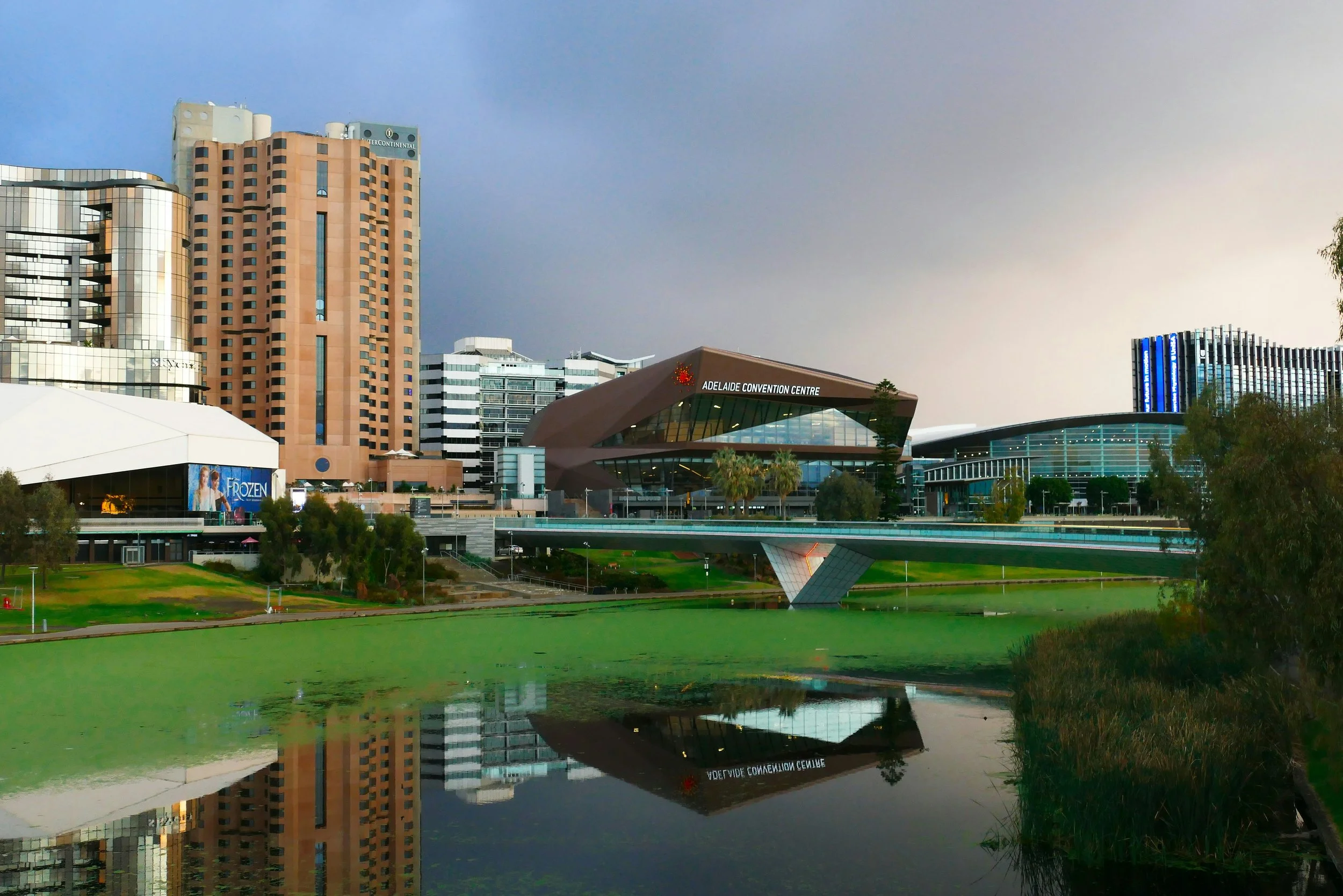
Project Scheduling in Adelaide
Project Scheduling provides Primavera P6 project scheduling for mining, minerals processing, steel and infrastructure projects in Adelaide and across South Australia, from tender and baseline programs through delivery to completion. We link construction sequence, procurement, approvals and resource demand, with the delivery team reviewing and affirming the proposed method, sequence and resource assumptions before the program is finalised.
Project scheduling services for Adelaide projects
We develop tender programs with the contract baseline in mind, carrying the bid’s logic and assumptions forward and recording agreed changes after award, then keep the program current through delivery.
Tender programs: sequence, procurement windows, Indirects and resource demand, prepared for the tender submission with the Basis of Schedule and Methodology.
Baseline programs: the agreed reference program established in accordance with the contract, with subsequent baseline changes controlled and recorded.
Program updates: actual progress and remaining-work forecasts recorded in the current program, compared with the baseline, with variance reporting and an archived record of each update.
Shutdown and turnaround planning: outage programs planned in hours, with the critical path, resourcing and methodology for work on operating plant.
Schedule recovery: a recovery program built from actual progress, with options tested, costed and agreed with the delivery team.
Schedule risk analysis: completion dates at chosen confidence levels, with contingency sized from the analysis.
Forensic delay analysis: extension of time and delay claims built on contemporaneous project records.
South Australian experience
Our capability draws on South Australian project experience across two sectors:
Steelmaking: a blast furnace reline at an operating integrated steelworks, where the outage is planned and tracked in hours
Mining and minerals processing: copper and uranium mining and processing operations, including work on operating plant
That work shapes how we program South Australian projects: outage windows on plant that has to return to production, large multi-discipline shutdown crews, and work in remote and operating environments.
South Australian conditions built into the program
Shutdown scope tested against the available window. We develop the outage sequence at hourly resolution, review workfront and crew interfaces with the delivery team, and distinguish preparation, shutdown execution and recommissioning. Work that can safely and practicably be completed outside the outage is identified to reduce pressure within the window.
Heat-sensitive work planned around project controls. South Australian summers bring runs of very hot days. We identify activities affected by hot conditions and record the working-hour and productivity assumptions agreed with the delivery team. Where applicable, the program reflects approved changes to shifts, breaks and concrete-placement windows rather than applying a uniform heat allowance.
Working calendars checked against the location and the shift. South Australia has its own public holidays, including Adelaide Cup Day in March, Proclamation Day after Christmas, and part-day holidays from 7pm to midnight on Christmas Eve and New Year’s Eve. For hourly outage programs, part-day holidays are checked against the actual shift and agreed working arrangements rather than represented automatically as a whole non-working day.
South Australian project pipeline
The 2026-27 South Australian Budget sets a general government investing program of $22.7 billion from 2026-27 to 2029-30. Major projects in the Budget include the North-South Corridor from River Torrens to Darlington, with $11.2 billion between 2025-26 and 2029-30, and the new Women’s and Children’s Hospital, with $2.9 billion over the same period. Both figures are spending within the forward estimates, not total project cost.
What the pipeline means for an Adelaide program
Capacity depends on project scale. RLB’s September 2026 report describes Adelaide as operating near capacity at the Tier 1 head contractor and subcontractor level, with contractors becoming more selective and preferring lower-risk projects. Tier 2 and Tier 3 markets currently offer greater competition and available capacity, although RLB expects increasing Tier 1 demand to place pressure on those resources from late 2026.
Tender prices are forecast to keep rising. RLB forecasts Adelaide tender price escalation of 5.1% in 2026, 5.5% in 2027, 5.5% in 2028 and 5.0% in 2029, with the pipeline led by defence-related work moving into construction.
Skilled trades are short. RLB reports shortages in structural, civil and building services trades, and Infrastructure Australia’s November 2025 report estimated a national shortage of 141,000 workers on public infrastructure works in October 2025, forecast to peak above 300,000 in mid-2027.
With contractors choosing lower-risk work, a clear program and risk allocation can affect bidder interest. We make procurement and resource assumptions explicit and identify when subcontractor, crew and supplier availability needs confirming.
South Australian approvals in the program
Working with the project’s planning and approvals advisers, we identify the approvals pathway and distinguish assessment activities, information requests, conditions and subsequent approvals, then link each decision to the work packages it releases.
Under PlanSA, planning-consent assessment periods depend on the pathway, including whether referrals and public notification are required. We distinguish verification, the applicable assessment stages, information requests and decision issue, without double-counting notification or response periods included in the published timetable. For performance-assessed development, the assessment clock may be suspended while additional information is provided.
Where relevant, we also distinguish planning consent, building consent and final development approval, linking each required decision and condition to the work it releases. Mining approvals are established separately with the project’s advisers rather than assumed to follow the same planning-consent pathway. Our article on scheduling project approvals explains the method.
Frequently asked questions
Do you provide project scheduling for Adelaide projects?
Yes. We provide Primavera P6 project scheduling for mining, minerals processing, steel and infrastructure projects in Adelaide and across South Australia, from tender and baseline programs through progress updates, recovery and delay analysis.
How do you schedule a major plant outage or reline?
We develop the outage sequence at hourly resolution, review workfront and crew interfaces with the delivery team, and distinguish preparation, shutdown execution and recommissioning. Work that can safely and practicably be completed outside the outage is identified to reduce pressure within the window.
How do you handle PlanSA approvals in the program?
Working with the project’s planning and approvals advisers, we distinguish verification, the applicable assessment stages, information requests and decision issue without double-counting published periods, and separate planning consent, building consent and development approval where relevant.
Can you work to Adelaide hours?
Yes. We work Adelaide time for Adelaide projects, including progress meetings, tender deadlines and program submissions.
Planning a shutdown or a build in South Australia?
Get a program that links construction and outage sequences, preparation, procurement and approvals, with the available work windows and resource assumptions made clear.